A septic system typically lasts 20 to 30 years before it needs major replacement, according to University of Maryland Extension, and Ohio State University Extension says around 20 years for a well-kept system. The parts age at different rates. In the U.S. EPA’s estimates a concrete tank can pass 50 years, many pumps and controls need replacing every 10 to 20, and the drain field can begin to slow after 25 to 30 years. How close a system gets to the long end depends mostly on whether it suits its soil and how regularly the tank is pumped.
Lifespan part by part
How long each part lasts
Usually the longest-lived part, if it was built well.
- Concrete: 50 years or more (EPA); Fixr says a well-made one can easily reach 40.
- Plastic: about as long as concrete (EPA); Fixr says about 30 years.
- Steel: 20 to 25 years (Fixr), and Fixr warns that newer steel tanks may rust sooner.
Only on systems that pump effluent: mounds, aerobic units, drip and uphill fields.
- Many need replacing every 10 to 20 years (EPA).
- Systems with pumps or float switches should generally be inspected once a year (EPA).
- For aerobic and other treatment units, ask the maker for the expected service life.
Where most systems finally give out.
- After 25 to 30 years, the organic mat in the trenches can thicken and slow drainage (EPA).
- Solids washed out of an unpumped tank clog it much sooner.
- Heavy traffic, roots and extra water all shorten its life.
The figures behind those tabs, side by side:
| Part | U.S. EPA (Mar 2026) | Other published estimates |
|---|---|---|
| Concrete tank | 50 years or more | HomeGuide: often more than 40 years; Fixr: easily 40 if well made |
| Plastic tank | similar to concrete | Fixr: about 30 years |
| Steel tank | — | Fixr and HomeGuide: 20 to 25 years |
| Pump and controls | many every 10 to 20 years | — |
| Drain field | can slow after 25 to 30 years | HomeGuide: 20 to 25 years if built and kept well |
| Whole system | — | UMD Extension: 20 to 30 years; Ohio State: about 20; HomeGuide: 20 to 40; Fixr: 20 to 30 (15 to 40 elsewhere on its page) |
Why the published numbers disagree
The EPA lists what sets a system’s life: what it’s made of, how it was designed and installed, the conditions it sits in, and how it’s maintained. Those vary from house to house, so a single number can’t fit everyone.
The estimates also measure different things. The extension services talk about the whole system, the EPA splits tank, pump and field, and HomeGuide gives a system 20 to 40 years but a drain field only 20 to 25. NC State Extension offers a handy comparison: kept up properly, a septic system lasts about as long as an asphalt shingle roof.
What wears a system out early
- A design that doesn’t suit the site. The EPA says most malfunctions come from inappropriate design or poor maintenance, such as fields placed in unsuitable soil, on steep slopes or over a high water table.
- Pumping put off too long. Sludge that fills the tank flows into the field and clogs the soil. UMD Extension says that if 15 years have passed without a pump-out, the owner has almost certainly waited too long.
- Too much water. NC State lists leaking fixtures, more people in the house, added appliances and sump pumps, icemakers or dehumidifiers draining into the system. Roof and driveway runoff over the field adds to it.
- Weight and roots. Driving, paving or building over the system can crush pipes and compact the soil, and NC State advises keeping trees and shrubs at least 25 feet from the drain field.
- The wrong things down the drain. The EPA’s no-flush list includes grease, wipes, chemicals and medicines, and its FAQ says additives aren’t needed and may make the field perform worse.
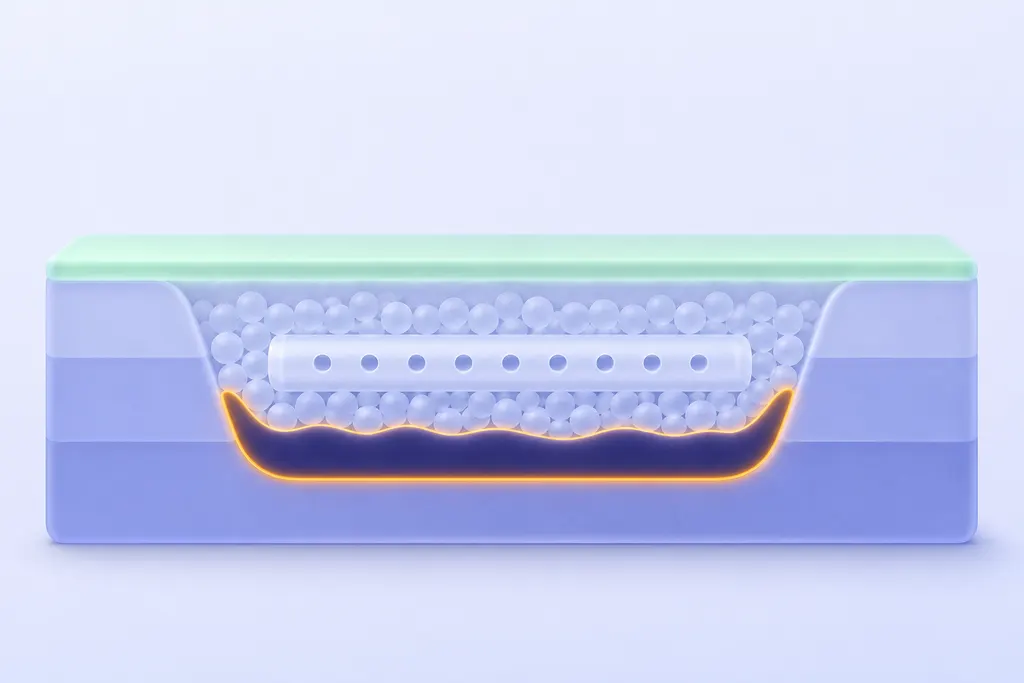
What keeps it going
The EPA’s care routine has four parts: have the system inspected and pumped, use water efficiently, put only waste and toilet paper down the drain, and protect the field from vehicles, deep roots and runoff. A typical household system should be inspected by a professional at least every three years and pumped every three to five; systems with pumps or float switches generally need an inspection once a year. Your interval depends on tank size and household, which the planner below estimates. More on timing: how often to pump a septic tank.
University of Maryland Extension adds a point about upgrades: an advanced treatment unit sends cleaner effluent to the field than a standard tank, which can help the field last longer.
When to start planning a replacement
Once a system passes 25 to 30 years, the EPA says it is likely close to the end of its useful life and suggests planning an upgrade before an emergency. Two things make that easier.
First, the parts don’t have to go together. UMD Extension notes that the tank and field can fail independently, so a cracked tank may be replaced and connected to the existing field. Second, Missouri’s owner’s manual notes that counties and cities with septic permit programs may keep records on a system; ask your county office for the original permit, which can show when the system went in.
HomeGuide suggests replacing a tank that is more than 40 years old, cracked, in need of repeated repairs or filling faster than it should. Price ranges for each scope are on septic tank replacement cost, and the warning signs that point to the field are on signs of drain field failure.
Questions for your next inspection
- How old are the tank, the pump and the drain field, and what do the county records show?
- What condition are the baffles or outlet tee and the effluent filter in?
- Were there wet spots, ponding or uneven flow over the field?
- What were the sludge and scum levels, and when should we pump next?
- Which part will likely need replacing first, and roughly when?
- Is a reserve area for a future field on record?
- Can I have the findings in writing?
Any work these questions turn up belongs to a licensed septic contractor, with a permit from your local health department.
Common questions
Can a septic system last 50 years?
Parts of it can. The EPA says a concrete tank may last 50 years or more. The drain field is the weak point: after 25 to 30 years the mat of organic growth in the trenches can thicken and slow drainage. A 50-year-old system with its original field is the exception; one with a newer field is more common.
How long does a drain field last?
Many fields start to struggle somewhere past 25 to 30 years, by the EPA's account, and HomeGuide's estimate for a well-built, well-kept field is 20 to 25 years. Regular pumping matters most, because a full tank lets solids wash out and clog the soil. Warning signs are on signs of drain field failure.
How long does a septic tank last?
The EPA puts concrete at 50 years or more and plastic at a similar span, though it notes older tanks may be less well built. Fixr gives plastic about 30 years, and both Fixr and HomeGuide put steel at 20 to 25. The EPA suggests asking the manufacturer about a given tank's expected life.
Is a 30-year-old septic system near the end?
It may be. The EPA says a system past 25 to 30 years is likely close to its useful life and advises planning an upgrade before an emergency forces one. Have it inspected, find the county records, and price the options while it still works. Buyers can start with septic inspection cost.
Want the numbers for your own house? The planner sizes the tank for your bedrooms, estimates the pump-out interval for your household and lines up dated price ranges.
Open the plannerPictures on SepticSizer are schematic drawings produced with an AI image tool. None of them is a photo of a real tank, yard, crew, product or job.
Sources
10 citedHide listShow all 10
- U.S. EPA (opens in a new tab) Frequent Questions on Septic Systems Last updated March 11, 2026Checked Nov 24, 2026
- U.S. EPA (opens in a new tab) How to Care for Your Septic System Last updated August 17, 2026Checked Nov 24, 2026
- U.S. EPA (opens in a new tab) Resolving Septic System Malfunctions Last updated March 11, 2026Checked Nov 24, 2026
- University of Maryland Extension (opens in a new tab) FAQs on Septic Systems No update date shownRead Nov 24, 2026
- Ohio State University Extension (opens in a new tab) Septic System Care and Maintenance, AEX-740 June 28, 2019Checked Nov 24, 2026
- NC State Extension (opens in a new tab) Why Do Septic Systems Fail?, AG-439-44 Revised Jan 2, 2024Checked Nov 24, 2026
- Fixr (opens in a new tab) How much does it cost to install a septic tank system? Updated Jan 31, 2025Checked Nov 24, 2026
- HomeGuide (opens in a new tab) How Much Does Septic Tank System Repair Cost? December 22, 2025Read Nov 24, 2026 from the Internet Archive copy of Oct 7, 2026
- HomeGuide (opens in a new tab) How Much Does a Leach or Drain Field Replacement Cost? December 22, 2025Read Nov 24, 2026 from the Internet Archive copy of Oct 19, 2026
- Missouri DHSS (opens in a new tab) Onsite Wastewater Treatment System Owner's Manual: Troubleshooting System Problems No date shownChecked Nov 24, 2026
Prices are national ranges as each guide published them, on the date shown. Rules and fees differ by state and county, so confirm with your local health department.